Marketing Advice From Lucy, Ralph, and George

Early television experimented with formats. In the beginning, only one camera was used. Later on two, and finally three became the standard. If you look at early episodes of I Love Lucy, The Honeymooners and
Burns and Allen, you’ll see how much could be done with simple camera
setups. Perhaps Web designers, who think that using only the latest
plug-ins is effective, might learn a little from those old techniques.

Lucy, Ralph and George (Lucille Ball, Jackie Gleason, and George
Burns, respectively) also might serve as models for what they said.
They all used comedy. Perhaps more Web sites should include some humor
today. Another aspect of their comedy was that they didn’t use, or
apparently need, profanity. Good clean fun was what they were able to
achieve.

The story lines on each show were also simple. There were usually only
the regulars who appeared…only four per show. They kept the story
short (half-hour segments) and simple. Folks could understand the
plot, and it would be over within the attention span of most viewers.

Another good point for Web creators…simple and short makes sense.

Another aspect of the old time television shows was that they were in
black and white. As photographers like Ansel Adams would prove, black
and white works. Colors often divert attention away from the content
that you are trying to achieve on the Web. Dazzling sites may only be
remembered for the glitz, not the message.

When creating a Web site it may be a good idea to remember these
communications pioneers. Their programs are still being viewed.

Although it may appear that I’m a bit old fashioned in my taste (which
I usually am), it’s also good to remember that some old-fashioned
concepts are equally valid today. Learning from the past can save a
lot of time, effort and even money.

25 Down-to-Earth Writing Tips

  1. “Do not blame anybody for your mistakes and failures.” ~~Bernard Baruch
  2. Switch your point of view. Would that make your story better?
  3. You can re-start your life right now! If you weren’t a writer yesterday, you can be a writer starting right now!
  4. Life begins every second. Don’t waste time thinking about it, start writing.
  5. To be creative, you might want to do things the un-techie way (for example, postcards instead of emails).
  6. Start your next short story by writing the last line first.
  7. Go for perfect! Book writing has never been easier. Years ago, when I had to change a word I had to re-type (with a typewriter) the whole chapter.
  8. Can you tell your “story” using a series of pictures (with and/or without captions)?
  9. Try writing a short story that incorporates a line from The Story Starter.
  10. Follow less, lead more (especially on Twitter and Facebook).
  11. Watch less TV and write more.
  12. All of the writers on the best sellers lists had (and probably still have) the same doubts as you.
  13. Read a magazine or blog you never read before. It’s full of ideas for writers.
  14. Starting a sentence with an “ing” word is a great way to start.
  15. Whenever you want to say “someday” substitute “today” and you’ll do better.
  16. Many procrastinators masquerade as writers. If you want to be a writer write. Period.
  17. Gardeners will tell you that you have to be patient to see the fruits of your hard work, sometimes it takes years!
  18. Get an almanac! Read through it when you have time. You might (probably will) come up with article ideas.
  19. Fine writing, like fine wine, doesn’t happen over night.
  20. If you can write a 5 paragraph composition, you can write a magazine article. Same thing, just a bit longer
  21. Does your character transform for the better or worse? What would happen if you switched it?
  22. You can learn more going to a place you’ve never been than spending hours online. It must be the air!
  23. Going to the movies is nice, reading a movie script gives you a sense of how the story comes together.
  24. To learn how to write, study gardeners, photographers, poker players, pizza makers, etc. Learn from everyone.
  25. Just like the tango, it takes TWO to write: one writer and at least one other person to read. I’m not big on writing for myself.

It’s time!

Maybe, it’s time to say it. Why hide things any longer?

It?

Why do you still support Donald Trump?

Do you actually agree with what he says and does?

Really, is that it?

If it is…say so…publicly. Explain why…without diverting the conversation away from what Trump does. Telling us about what Obama or Clinton may or may not have done is silly. Trump’s been in office for more than three years. He has a record to run on.

Do you think he has handled the pandemic well?

How has he done with dealing with racial issues?

How is his foreign policy? Are our allies closer to us than before he came to office?

Do you approve of his firing key government officials…especially Inspectors General and Federal Prosecutors…who may be investigating members of his administration?

Do you think that he lies as often as he is reported by media?

Are you more comfortable with him in the White House than previous presidents?

Simple questions. Think about them.

It’s time.

When this is over, you may be over too!

There was a time (not that long ago) when businesses needed typists. Word processing eliminated most of them. Change was difficult for some, but welcome by those who survived.

We are about to enter another time when much will change. Bosses will realize that some of their employees are not really needed. They will also realize that many jobs can be done at home and as much office space will not be needed. Instead of traveling to meet customers/clients, Zoom may be enough.

It may be a good time to consider what you can offer when this terrible time is over. New skills may put you ahead…or leave you behind. Consider these skills for the future:

PowerPoint has been an office staple for decades. Speaking online has shown that that may not be enough. When this is over it may be a very good idea to find your local Toastmasters club and develop your public speaking skills.

PhotoShop is difficult to learn. Actually, very difficult. And that is the very reason you should learn to use it. Knowing what others do not know has always been an advantage. Now, even more so.

Although learning Microsoft Word is important, mastering Adobe’s InDesign will give you skills in designing documents, not just writing them.

Finally, your high school English teacher taught you how to write compositions and essays. She did not teach you to be a copywriter. Instead of paragraphs, copywriters using one or two sentences at a time. It’s different.

Be ready for the next phase of life/business…before it’s too late.

Making Your First Presentation Is Like Going On Your First Date

There’s too much talk about the fear of public speaking. It’s not that bad. It can be best compared to a first date.

You get nervous. You’re afraid of what the date (audience) will think of you. You want to make a good impression. What do you do?

You try to find out about the person (or the audience). The more you know the better your date (presentation) will be.

You prepare what you want to say…especially in the first minute so you don’t appear tongue tied. Think about things you want to say…a few important things is all you need. Dates and audiences really don’t want you to fail. It makes them uncomfortable. They want you to succeed.

Dress nicely. Dates and audiences make quick judgements on your appearance. If you look bad, they assume that they are in for a long evening (presentation).

Get there on time…early if possible.

Take a deep breath.

Ring the bell…start talking.

The chances are you will forget some of the things you wanted to mention. The good part is that your date (members of the audience) don’t know what you had in mind to say. Unless you tell them, they’ll never know.

The chances are your date (presentation) will be at least fine. If you get another opportunity for a date (presentation), it will be that much easier.

No kidding. Speaking is as easy as your first date.

3 Reasons to use your own photos when you speak…

I hate to see questions on Twitter, Facebook, or LinkedIn asking for the best places to buy photos for a presentation. The obvious, at least to me, answer is to look through your own photos. Here are 3 reasons:

  1. You should be the expert at what you are talking about. If you can find photos online, maybe you are not the one who should be speaking about a topic. I guess I can speak about vacationing in Rome…even though I’ve never been there…just by getting a bunch of photos that others have taken! I don’t do that. I only speak about topics I really know about based upon first hand experience.
  2. It’s also silly to project an image that others may have seen before. Smiling faces around a office table look phony and usually silly. How many meeting have you ever attended where everybody is good looking, smiling, and seem to be intense…at the same time?
  3. Assuming you are not a professional photographer, the audience does not expect perfect pictures. They come to hear you, not necessarily admire your photographic skill.

Take pictures whenever you can, you never know when you can use them for an upcoming speech.
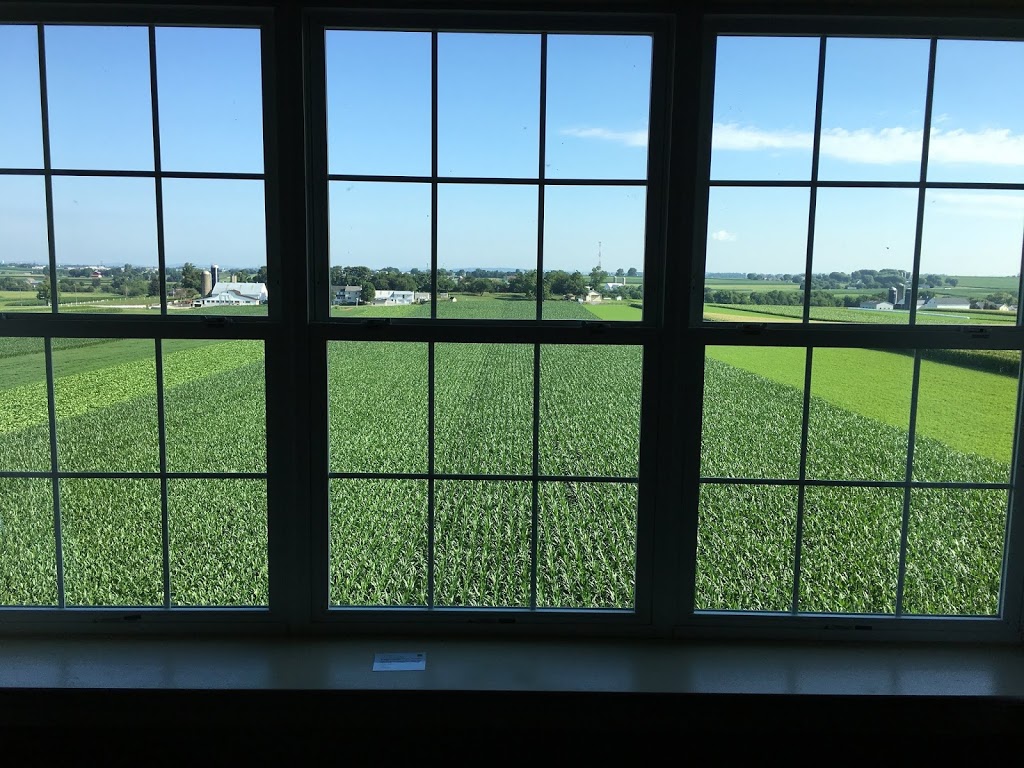
Incidentally, I took the photo of the Brooklyn Botanic Garden several years ago. I was in the perfect place at the perfect time. So when I speak about garden photography I know that nobody has has this shot exactly the way I got it. It isn’t the best photo ever taken at the BBG, but it’s pretty good. 🙂

The Perfect PowerPoint Slide!

Here’s an example of a “perfect” PowerPoint slide. Why is it perfect?

  1. There are no words.
  2. Without an explanation by the me, members of the audience would not understand why it’s important.
  3. The photo is original. I took it.
  4. The image fills the entire slide.
Perfection!

They asked you to speak…now what?

If you are asked to speak at a club, organization, or conference you should say YES. Speaking is not something to be afraid of doing. It’s fun! Here are 10 tips to help you.

Make sure you know the basics. How much time will you have? How big is the audience? Exactly what is the topic you will speak about? What is the room like – rows of chairs, round tables, etc.?

 Jot down notes about your topic. Put as much as you have on paper. Eliminate everything that isn’t on topic!

 What stories can you tell that illustrate your main points? People like stories much more than they like facts!

 If you are familiar with using PowerPoint consider using it. Slides with the fewest number of words are best. Never read what is written on the slide to the audience. If you are not familiar with it, this is NOT the time to learn. You want to be comfortable when you speak, you don’t want to be concerned with your tech. [Lincoln didn’t have PowerPoint for the Gettysburg Address. He did very well.]
 Plan what you want to say. Write it out if you like…but don’t even consider reading it or trying to memorize it. Practice your talk. The more you practice the more comfortable you will be.

 Good news! If you forget to say something…ONLY YOU WILL KNOW. Don’t worry about it.

 Prepare a handout to give out AFTER you finish that summarizes your main points. Don’t give out your PowerPoint slides. Without you describing the slide, they shouldn’t make any sense. If it does, they audience didn’t need you to speak. 

Arrive early. Test the microphone if there is one.

 Remember…the audience wants you to do a good job. Nobody wants to see a speaker fail. They are on your side. Smile…and go out and speak!